Ruminant Greenhouse Gas Monitoring
MouCarbon
Precision monitoring for every breath. Scientific quantification of carbon footprints.
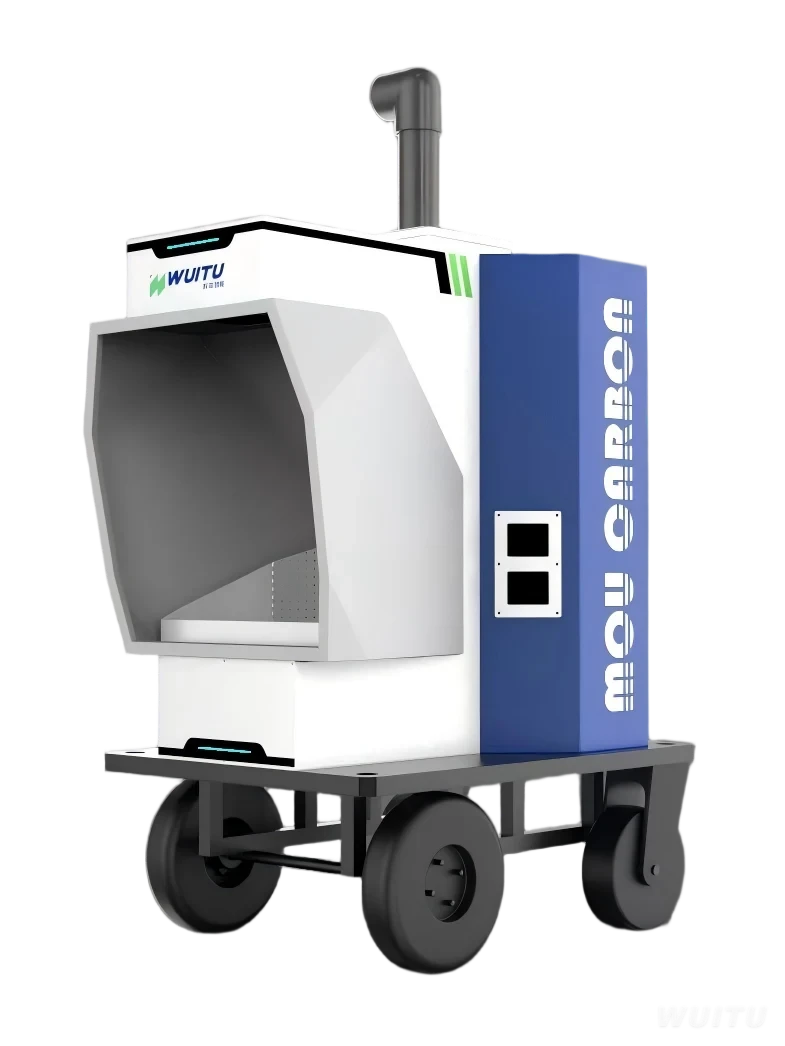
MouCarbon combines feed-bunk guidance, programmable bait dispensing, and automatic gas-path switching to encourage repeated voluntary animal visits. Its self-developed TDLAS laser sensors capture multiple gases and environmental parameters, building a complete field chain from individual identification and raw data to emission reports.
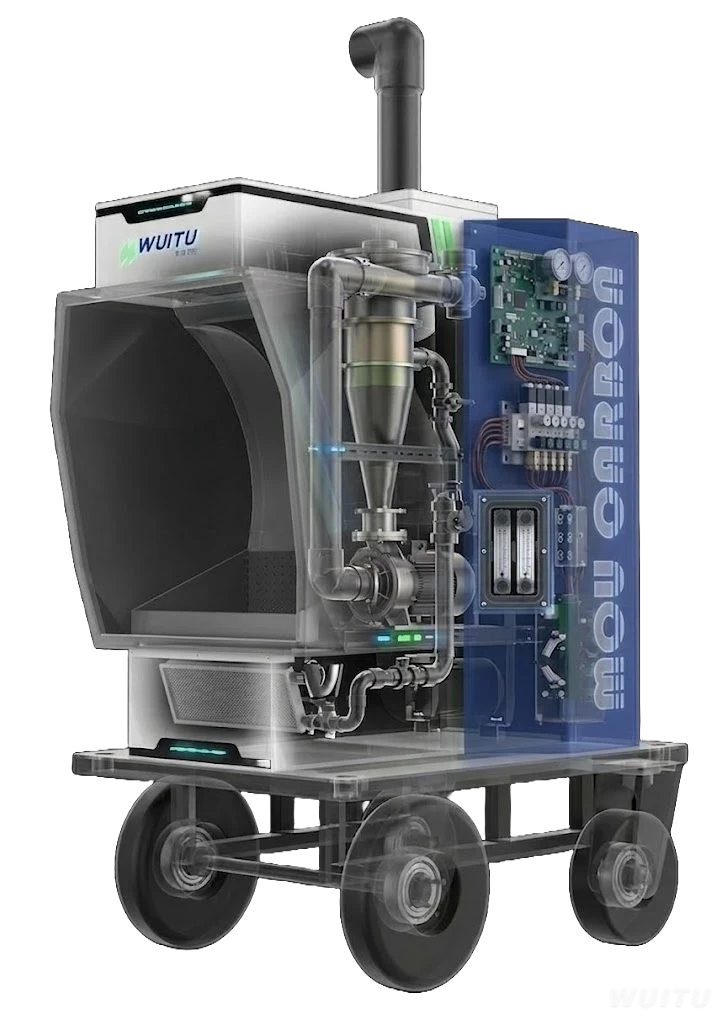
TDLAS / RFID / EDGE DATA
Sense → Identify → Persist → Report
From one voluntary visit to one traceable report
Precision sensing
TDLAS laser sensors capture CH₄, CO₂, H₂, and O₂ with temperature, humidity, pressure, and airflow compensation.
Individual identity
Common electronic ear tags link each animal to each visit, with an ear-tag-free test mode also available.
Data sovereignty
Live transmission when connected and on-device storage when offline, with USB, CSV, remote download, and private deployment options.
Smart reporting
Millisecond-level acquisition and WUITU models produce multi-indicator, multi-dimensional emission reports for each test plan.
Field Ready
One system, more measurement settings
Designed for both housed and grazing animals, including dairy cattle, beef cattle, yak, sheep, and other ruminants. Its corrosion-resistant stainless frame, wide climate range, and powered chassis support movement between barns and pastures.
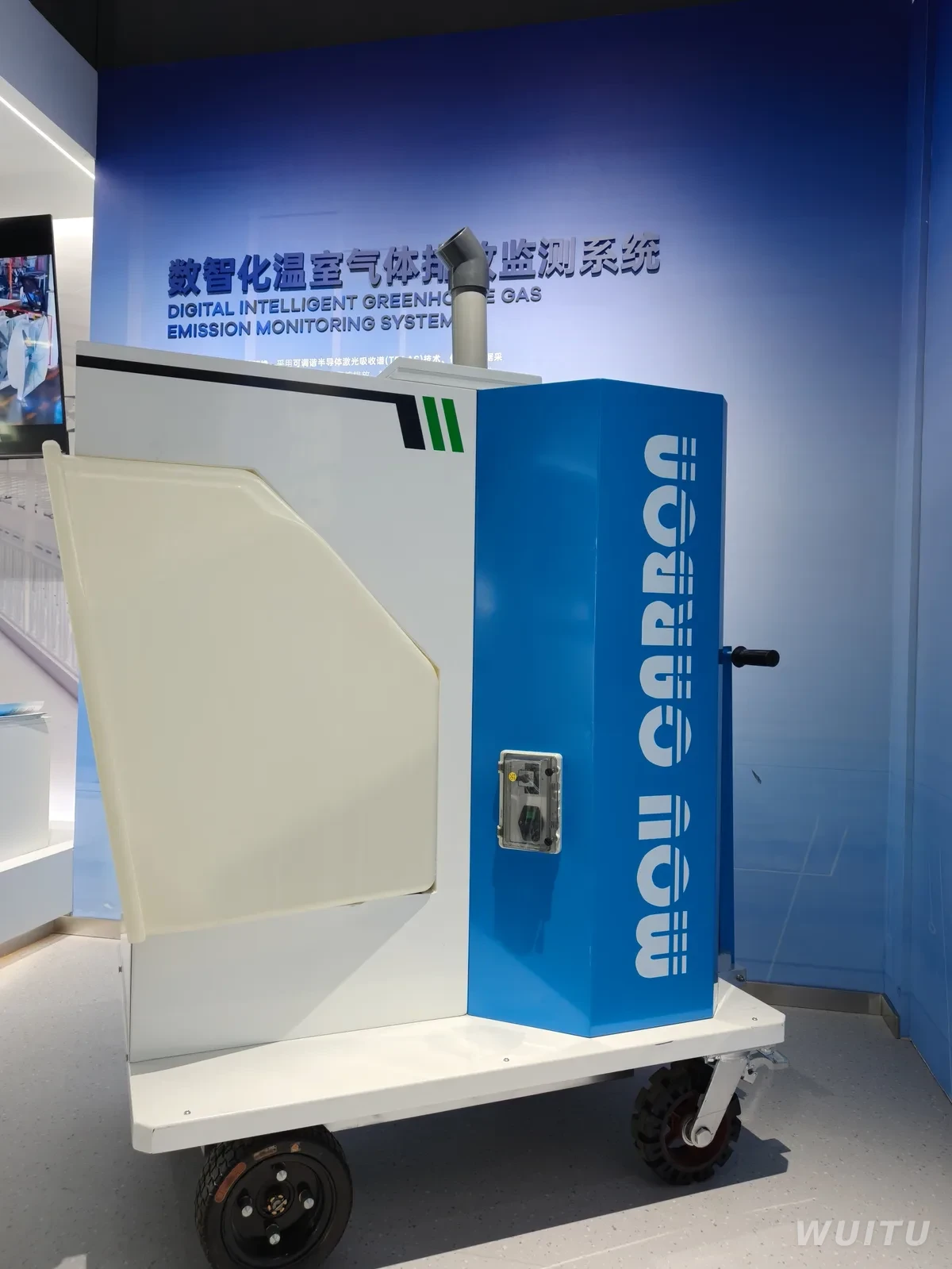
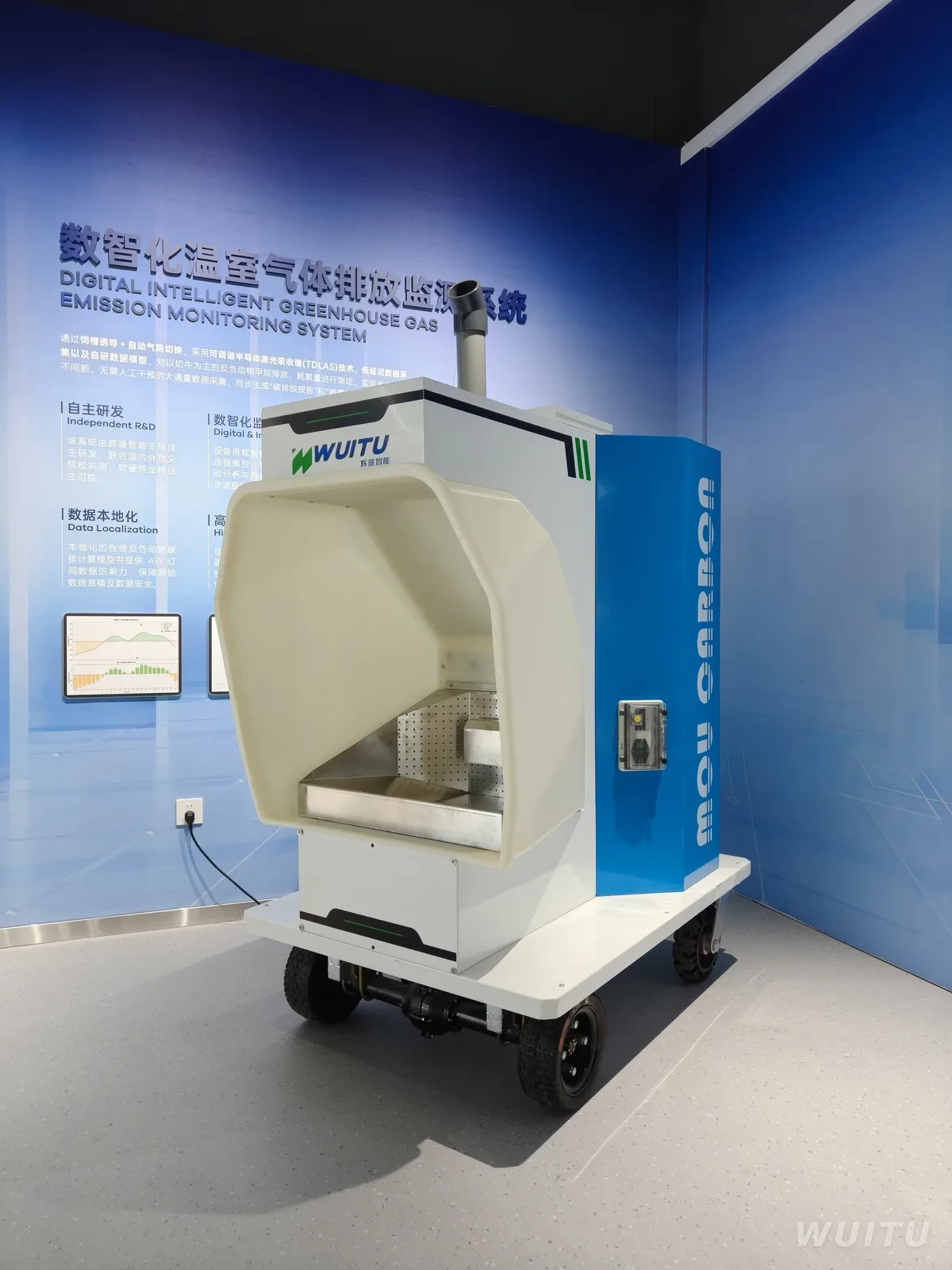
HousedGrazingDual powerPowered mobility
Technical Sheet
Key technical specifications
The system has completed accuracy testing by China Testing & Certification International Group and laboratory validation with AFBI in the UK, supporting reduction research, performance assessment, and carbon-asset development.
Work With WUITU
Choose the right engagement for your project
Device purchase
Available worldwide with configurable CH₄, CO₂, H₂, and O₂ sensor combinations.
Contact an advisorShort-term rental
Available in mainland China, matching equipment allocation to the test window and reducing one-off project cost.
Contact an advisorManaged measurement
Engineers, researchers, and professors deliver test design, field work, analysis, and reporting.
Contact an advisorCustom requirements
Secondary development, private deployment, special experimental models, and supporting hardware for unusual settings.
Contact an advisorValidated & Collaborative
Accuracy validation and joint research
The measurement chain has completed CTC accuracy testing and AFBI laboratory validation, alongside joint work with the Chinese Academy of Agricultural Sciences, China Agricultural University, Nanjing Agricultural University, Yangzhou University, and other research teams.
CAASChina Agricultural UniversityNanjing Agricultural UniversityYangzhou UniversityHenan University of Science and TechnologyCTCAFBI