From cutting carbon
Industry positioning
Drives the creation of industry technical standards and management norms, establishing a leading position in the sector.
WUITU | Zero-Carbon Ranch
Digital intelligence and clean energy at the core — starting from a measured carbon baseline to help large-scale ranches offset their footprint and cut emissions.
Powered byMouCarbon Monitoring · Moueasy Energy Boards · Rooftop Solar Service

The zero-carbon ranch is a specialized solution built for large-scale ranches, with digital intelligence and clean energy at its core, that effectively offsets the carbon footprint and reduces emissions. How much to cut, how to cut it, and whether it worked — all of it rests on measurable data.
The Baseline
Every reduction on a zero-carbon ranch starts from a measured baseline. MouCarbon does the measuring; the service workflow and reporting are covered under carbon services.
From cutting carbon
Drives the creation of industry technical standards and management norms, establishing a leading position in the sector.
From cutting carbon
Fewer pollution incidents and less litigation — lower penalty costs, compliance risk, and management attention consumed.
From cutting carbon
Low-carbon technology trims raw material use and lifts energy and resource efficiency, resulting in higher productivity.
Earned by cutting carbon
Low-carbon products, packaging, and branding build an environmental reputation that improves stakeholder relationships and commands a product premium.
Building a zero-carbon ranch starts from three directions: reduction at source, process control, and end-of-pipe utilization.
Cut emissions from feed and water
Select superior cattle breeds, optimize herd structure, and raise the standard of disease prevention to reduce the nitrogen, phosphorus, and other substances discharged per unit of milk produced.
Following the principle of separating clean water from waste and rainwater from sewage: replace open exercise yards with covered free-stall barns and build dedicated manure-clearing channels indoors — improving manure collection while preventing rainwater from mixing with manure and swelling the volume of wastewater.
Implement every process in the production chain, step by step
Learn and adopt advanced technologies
Large-scale ranches can choose trough (bin) composting or reactor composting to match their capacity and needs: the former handles large volumes but is more complex to operate; the latter handles less but is highly automated.
After solid-liquid separation, manure water can be blended with low-moisture materials such as straw, wood chips, and mushroom residue into standard fertilizer, putting it back to productive use.
Manure treatment produces large amounts of biogas slurry; storing and using it effectively is an essential link in the zero-carbon ranch.
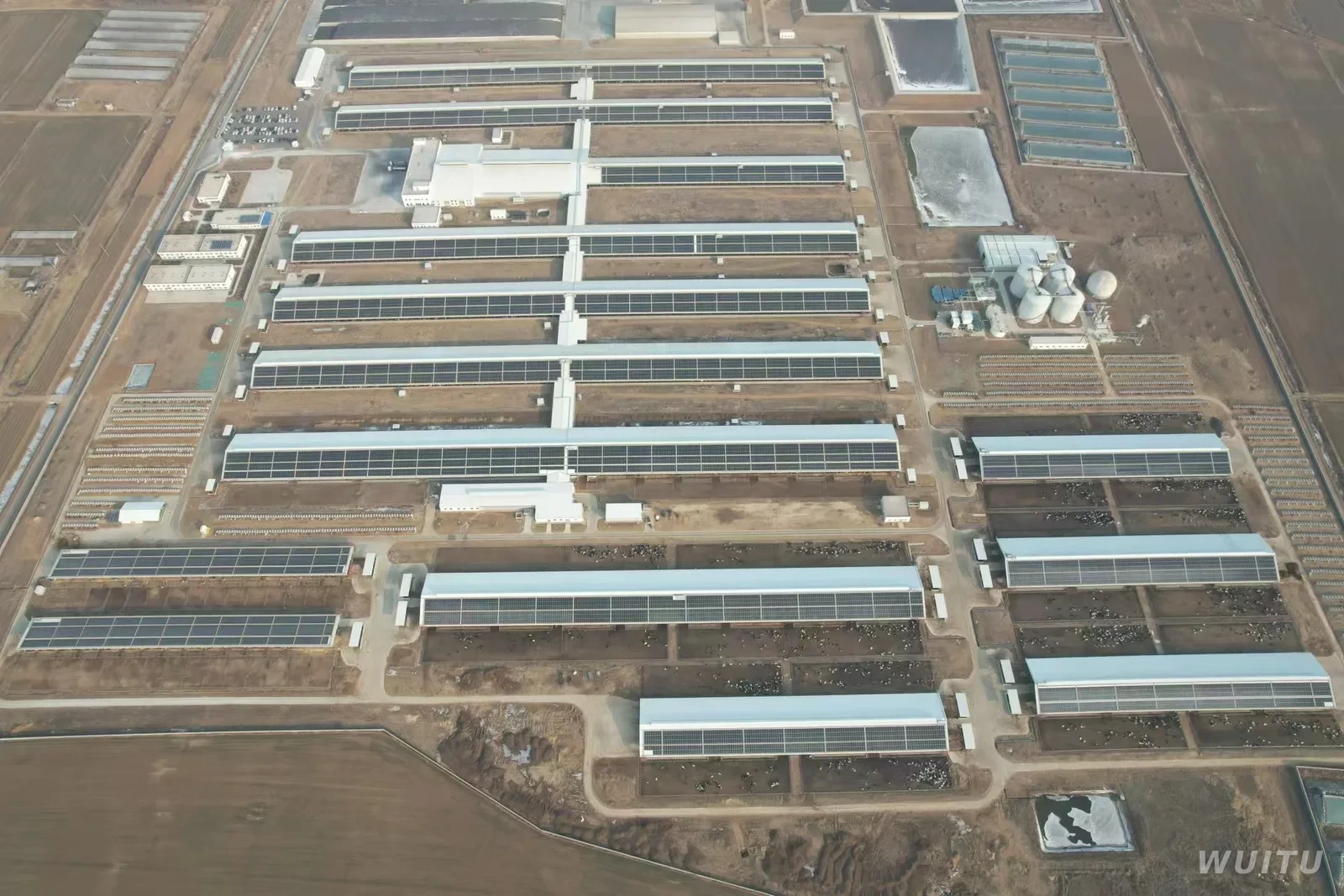
Partner with clean energy providers — photovoltaics, for example — covering barn roofs with solar panels to build small ecological power stations.
Clean Energy
Covering barn roofs with photovoltaic panels creates a small ecological power station — meeting the ranch's electricity needs while improving energy efficiency and cutting carbon emissions on the supply side.